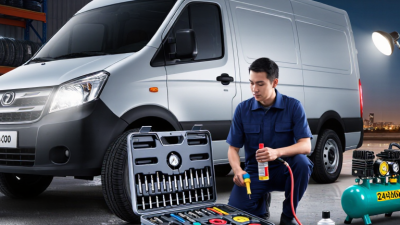
A flat tire rarely happens at a convenient time. It may strike on a crowded city road, outside a service station, or on a dim highway after dark. In those moments, 24 hour tire repair can mean more than a quick patch. Drivers need clear communication, suitable equipment, and a realistic arrival estimate. Real help matters.
This guide to China’s top 10 24 hour tire repair companies considers practical factors, including service areas, mobile repair options, tire replacement, towing support, and how customers can request assistance. Availability may differ between major cities and remote routes, and “24-hour” service does not always mean every repair is available everywhere. Ask about call-out fees, compatible tire sizes, payment methods, and estimated arrival time before agreeing to service.
No directory is perfect. A ranking can miss local providers or reflect information that has changed, so treat this list as a starting point, not a guarantee. Check recent customer feedback and confirm coverage directly, especially if your vehicle needs a specialist tire or you are far from a city center. A few careful questions can prevent a long wait beside the road.

China’s 24-hour tire repair services typically start with a phone or app request, followed by dispatch to the vehicle’s location. Technicians may inspect the tire, remove a nail, apply an approved repair, or fit a spare. If the tire’s sidewall is damaged or the puncture is too large, replacement or towing may be safer. The Ministry of Public Security reported 336 million automobiles in China at the end of 2023. That scale makes mobile assistance useful, though service coverage can differ greatly between city centers and remote roads.
A complete service may also include tire inflation, wheel checks, and basic pressure-monitoring system checks. At night, technicians should confirm the vehicle’s location and whether it is stopped in a safe place before beginning work. Not every tire is repairable. Still, service descriptions can sound clearer than real roadside conditions; traffic, weather, and parts availability may affect response times.
Tips: Share a precise location, tire size, and vehicle details when requesting help. Keep clear of moving traffic while waiting, and ask the technician to explain whether a repair or replacement is appropriate. Safety comes first.
China’s around-the-clock tire repair market is shaped by the scale and movement of road traffic. The Ministry of Public Security reported 435 million motor vehicles in China at the end of 2023, including 336 million automobiles. The Ministry of Transport’s 2023 Statistical Bulletin recorded 40.31 billion tonnes of road freight that year. These figures describe a large, active transport network, not the size of the repair market itself. Still, they help explain why tire failures can bring urgent calls at night, on highways, and near logistics hubs.
A typical 24-hour service operation combines a call center or digital booking channel with mobile repair crews. Dispatchers need a location, tire size, vehicle type, and a clear description of the damage. A technician may arrive with a jack, compressor, plugs, patches, or a replacement tire. For truck fleets, scheduled checks and service agreements can reduce roadside delays; individual drivers may rely on urgent callouts instead. Timing matters. A spare tire is not always available, and some damage cannot be safely repaired on the roadside.
Coverage varies by city, distance, and time of night. Rural routes may have longer waits, while busy urban areas can face traffic and parking constraints. The system is useful, but not seamless. Customers should confirm the estimated arrival time and repair scope before work begins. That small check can prevent confusion later.
A 24-hour day divided into three equal eight-hour periods. This illustrates the around-the-clock service model; it is not a survey of company operating hours in China.
Actual availability can vary by provider, location, and service type.
For a China-focused list of 24-hour tire repair companies, evaluate evidence, not advertising claims. The China Association of Automobile Manufacturers reported 30.094 million vehicle sales in 2023, reflecting the scale and variety of roadside needs. A credible provider should explain which cities and routes it covers, how callers reach a live dispatcher overnight, and whether its arrival-time estimates are based on actual service records.
Check practical capability. Can technicians handle punctures, tire changes, and common tire-pressure monitoring issues at the roadside? Do service vehicles carry suitable lifting equipment, lighting, and correctly sized replacement tires? Ask for written prices, call-out charges, repair limitations, and warranty terms before ranking a company. Details matter. A polished website is not proof, and even strong reviews can hide thin night-shift coverage. Compare recent customer feedback with dated dispatch records where available.
Safety and consistency deserve equal weight. Look for documented technician training, clear procedures for roadside work, and a process for referring damage that cannot be repaired safely. Track response times by region and time of day, rather than relying on a single national average. The criteria are imperfect: companies may report performance differently, and public reviews can overrepresent unusual experiences. State those gaps openly. A fair comparison should reward verifiable service coverage and transparent limits, not simply the largest advertised fleet.
China’s 24-hour tire repair companies differ in coverage, equipment, and dispatch practices. These ten profiles compare useful service models without relying on brand claims. Some focus on dense city streets, where a compact van can reach a parked car quickly. Others cover highway corridors, where safe stopping points and clear location details matter. Several serve commercial fleets and handle repeated calls for trucks or delivery vehicles. A few specialize in mobile tire changes, while others can inspect punctures and attempt repairs when conditions allow. Some offer support near industrial areas; others concentrate on residential districts. The right fit depends on your vehicle, location, and the damage.
A profile should also explain what the quoted callout includes. Ask whether labor, replacement tires, after-hours fees, and travel charges are separate. Check the stated service radius and estimated arrival time. A late-night promise can sound reassuring, but remote roads may still mean a long wait. Coverage descriptions are not always precise; that deserves scrutiny.
Tips: Share a map pin, tire size, and clear photos of the damage. Move to a safe place before calling, if possible. Confirm the final price and repair options by phone. A temporary fix may not suit every tire, and a careful technician should explain why.
An overview of ten common tire-service profiles. These are service models, not a verified company ranking or named-company directory; 24-hour availability and coverage vary by operator and location.
| Profile | Typical Vehicle Focus | Common Services | Service Format | Availability and Coverage Notes |
|---|---|---|---|---|
| 1. Mobile passenger-car tire repair | Private cars and small SUVs | Puncture assessment, tire change, inflation, and basic roadside assistance | A technician or service vehicle dispatched to the customer | After-hours dispatch may be available in some areas; confirm the service radius and response estimate. |
| 2. Roadside tire-rescue service | Cars and light commercial vehicles stopped roadside | Flat-tire assistance, spare-wheel installation, and towing referral when repair is not practical | On-location assistance, often arranged by phone or an online request | Road access, traffic restrictions, and technician location can affect service time and availability. |
| 3. Truck and heavy-duty tire service | Heavy trucks, buses, and other commercial vehicles | Heavy-tire replacement, puncture evaluation, and roadside wheel service | Specialized field equipment or service at a commercial-tire workshop | Vehicle type, tire size, equipment, and location determine whether an overnight callout is possible. |
| 4. Fleet tire-support service | Company cars, delivery vans, and managed vehicle fleets | Tire inspections, repairs, replacements, and maintenance coordination | Scheduled workshop support and, where offered, emergency dispatch | Service terms are commonly set by fleet agreement; emergency coverage should be checked in the contract. |
| 5. Urban tire workshop with after-hours assistance | Passenger cars and light commercial vehicles | Tire repair, fitting, balancing, and replacement | Primarily workshop-based; some locations may provide callout service | A workshop described as 24-hour may have different overnight staffing or service scope; confirm before travel. |
| 6. Highway-corridor tire assistance | Cars, coaches, and freight vehicles using major roads | Emergency tire changes, roadside assessment, and referral to nearby repair facilities | Dispatch or assistance coordinated around a road corridor or service area | Coverage is location-specific; access rules and safe stopping arrangements may affect response. |
| 7. Motorcycle and electric two-wheeler tire service | Motorcycles, scooters, and electric two-wheelers | Tube or tire inspection, puncture repair, and replacement where compatible parts are available | Local repair shop or limited mobile assistance | Availability depends on wheel type, tire specification, parts stock, and local service hours. |
| 8. Tire delivery and fitting service | Passenger cars and selected commercial vehicles | Tire supply, fitting, and replacement coordination | Product delivery combined with fitting at a partner workshop or service location | Late-night product availability and fitting should be confirmed separately; delivery does not necessarily mean 24-hour installation. |
| 9. Commercial-van and last-mile vehicle support | Delivery vans and light-duty work vehicles | Puncture response, tire replacement, and maintenance support | Mobile callout or workshop service, sometimes arranged for business customers | Vehicle downtime requirements and fleet arrangements can influence response priority and service terms. |
| 10. Regional and rural tire assistance | Passenger cars and work vehicles outside dense urban centers | Basic tire repair, spare-wheel installation, and referral for replacement | Local workshop or technician dispatch, depending on the area | Longer travel distances and limited overnight staffing can restrict 24-hour coverage. |
Verification note: Confirm current operating hours, location coverage, vehicle and tire compatibility, callout charges, and estimated arrival time directly with the local service provider.
Choosing a 24-hour tire repair provider starts with the problem in front of you. Is the tire losing air slowly, completely flat, or visibly damaged? Describe what you see and share your location as accurately as possible. A clear explanation helps the provider judge whether a roadside repair is practical or a tire change is needed. Ask for an estimated arrival time, not just a promise of quick service. Delays happen.
Confirm what the quoted price includes. It may cover travel, labor, a repair, or a replacement tire, but not necessarily all of them. Ask whether the technician can handle your tire size and vehicle type, and whether payment methods are clear before work begins. If you are stopped near moving traffic, tell the dispatcher. Stay in a safer location while you wait, when possible.
Experience matters, but so does communication. Look for recent feedback that mentions punctuality, clear pricing, and careful work. A few specific details are more useful than a string of vague ratings. You can also ask how the technician checks whether a tire is safe to repair. Not every puncture can be fixed reliably, and a rushed answer deserves a second question. Online reviews can be inconsistent, so treat them as clues, not proof.