
China Top 10 Rail Crossing Signal Manufacturers

China’s railway expansion has made Rail Crossing Signal technology a practical safety priority, not merely an equipment category. China State Railway Group reported that China’s railway network exceeded 159,000 kilometers by the end of 2024, including more than 48,000 kilometers of high-speed lines. Each crossing demands dependable detection, warning lights, audible alarms, barriers, and clear communication with nearby control systems.

The UIC Railway Safety Database and the International Transport Forum both emphasize consistent risk management, human-factor design, and reliable infrastructure maintenance. These principles matter in China, where equipment may operate beside busy industrial routes, rural roads, and harsh outdoor environments. A signal cabinet facing dust, rain, vibration, and winter temperature changes cannot be judged by appearance alone. Testing depth matters.

This overview identifies ten notable Chinese manufacturers connected with rail crossing signal equipment and related systems. The assessment considers engineering capability, product coverage, certifications, project experience, customization, and after-sales support. It also examines whether manufacturers can provide traceable testing records and stable replacement parts. “Top” is not an official ranking. It is a practical market comparison.

Available company data remains uneven. Some manufacturers publish detailed technical documents, while others disclose little. That limitation deserves attention. Product claims should be checked against project references, applicable railway standards, factory audits, and independent acceptance testing. Reports such as the UNIFE World Rail Market Study 2024 indicate continued global rail investment, but market growth does not automatically prove product quality. Careful verification still comes first.
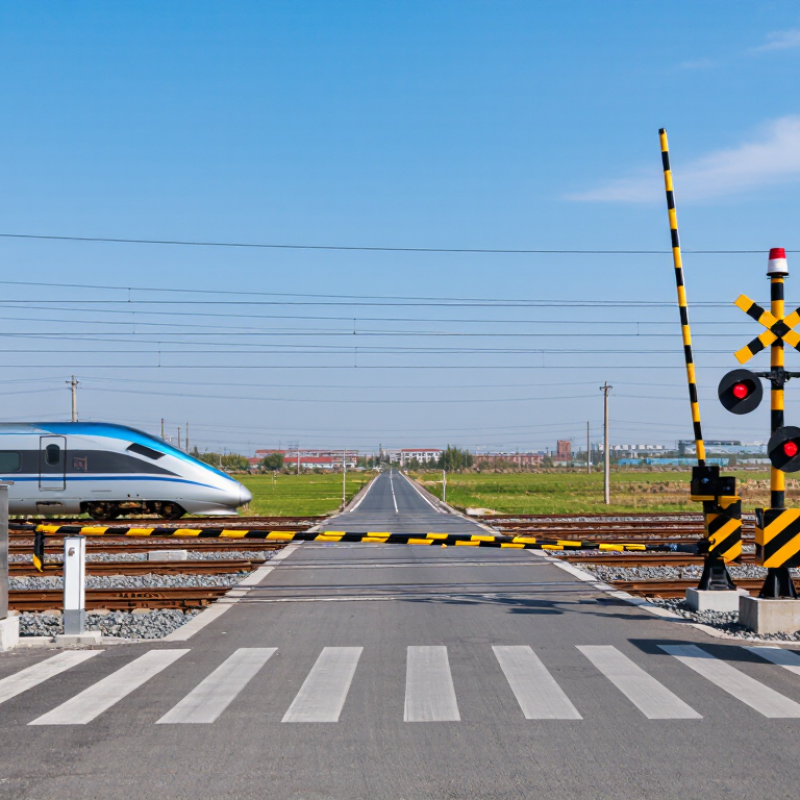
China Top 10 Rail Crossing Signal Manufacturers

Definition and Role of Rail Crossing Signal Systems in China

Rail crossing signal systems are safety systems that control movement where railway tracks meet public roads. In China, they combine warning lights, audible alarms, crossing barriers, track circuits, axle counters, and control cabinets. Their role is simple but critical: detect approaching trains, warn road users, and keep vehicles away from the tracks.

The system usually begins with train detection equipment placed near the crossing. When a train enters the detection zone, red lights flash and bells sound. Barriers then lower after a controlled delay. In busy industrial areas, signals may also connect with traffic lights and railway control centers. Operators monitor equipment status, power supply, communication links, and emergency faults. Clear records support inspections and maintenance.

Weather creates practical challenges. Heavy rain can affect road visibility, while dust may reduce sensor reliability. A damaged cable or weak backup battery can also interrupt protection. Good manufacturers therefore design redundant circuits, sealed cabinets, self-diagnostic functions, and manual emergency controls. Field technicians still matter. Technology cannot replace careful inspection.

No system is perfect. Human behavior remains unpredictable. Some crossings also face limited space, irregular road traffic, or outdated infrastructure. Engineers must assess local train frequency, road design, visibility, and maintenance conditions before selecting equipment. Reliable performance depends on both sound engineering and disciplined daily management. That part is often underestimated.

Key Technologies Used by Chinese Rail Crossing Signal Manufacturers

China Top 10 Rail Crossing Signal Manufacturers

Chinese rail crossing signal manufacturers increasingly combine fail-safe control, precise detection, and remote diagnostics. The 2024 China Railway Statistical Bulletin reported more than 162,000 kilometers of operating railway in China. This enormous network demands equipment that remains dependable in rain, dust, snow, and unstable power conditions.

Track circuits and axle counters verify whether a train occupies a section. Interlocking systems then prevent conflicting movement commands. Many crossings use dual-channel controllers, backup power, and red LED warning lights. Fiber-optic communication improves signal stability over long distances. Radar, cameras, and laser-based sensors can detect vehicles or obstacles near the crossing. Yet detection is not perfect. Heavy rain, mud, and poor visibility can still create false readings.

Remote monitoring is becoming more important. The 2024 Railway Safety and Interoperability Report from the European Union Agency for Railways identifies level crossings as a continuing safety concern across European networks. Chinese manufacturers therefore add event recording, condition monitoring, and predictive maintenance functions. Technicians can review voltage changes, relay actions, and communication delays before failures become visible. Artificial intelligence may help classify abnormal behavior, but it should not replace certified safety logic. That assumption needs testing. Cybersecurity also matters, especially when crossings connect with centralized control platforms. Secure authentication, network isolation, and software version control are now practical requirements, not optional features.

China Top 10 Rail Crossing Signal Manufacturers - Key Technologies Used by Chinese Rail Crossing Signal Manufacturers
No. Anonymous Manufacturer Profile Typical Product Focus Train Detection Technology Warning and Protection Equipment Control and Safety Technology Communication and Monitoring Key Technical Advantages Typical Application
1 Manufacturer Profile 01 Integrated level-crossing signal system
Controller, warning lights, bells and barrier equipment
Track circuits and axle-counter interfaces for detecting train occupancy and direction. LED crossing lights, audible alarms, automatic barriers and emergency manual release. Fail-safe control logic with watchdog monitoring, relay or electronic interlocking interfaces and event logging. Wired railway communication, remote diagnostic interface and equipment-status feedback. Modular architecture, straightforward maintenance and compatibility with conventional railway signalling infrastructure. Conventional and upgraded crossings on industrial, regional and mainline railway routes.
2 Manufacturer Profile 02 Electronic level-crossing controller
Safety logic unit and field interface modules
Dual-channel track-circuit inputs, axle counters or approved external train-detection systems. High-visibility LED flashers, warning bells, road signals and four-quadrant barrier control. Redundant processing, input plausibility checks, fail-safe output de-energization and self-diagnostics. Serial or Ethernet-based maintenance communication, alarm reporting and centralized status supervision. Reduced relay count, configurable logic and improved fault isolation through digital diagnostics. Busy public-road crossings requiring condition monitoring and configurable operating logic.
3 Manufacturer Profile 03 Obstacle-detection crossing package
Roadway protection and intrusion detection
Train approach detection through track circuits or axle counters, combined with roadway-area monitoring. Barriers, pedestrian gates, obstacle-detection radar, laser or video-based monitoring and emergency signals. Safety-rated obstacle confirmation logic that can report an occupied crossing area to the railway signal system. Fiber-optic or copper communication, local diagnostics and video or sensor status transmission. Additional protection against vehicles or objects trapped inside the crossing protection zone. High-risk crossings with heavy road traffic, restricted visibility or frequent pedestrian movement.
4 Manufacturer Profile 04 Axle-counter-based crossing system
Train detection and direction processing
Wheel-sensor heads and evaluation units that count axles entering and leaving defined detection sections. Automatic warning lights, bells, barriers and optional pedestrian warning equipment. Direction evaluation, section-clear verification, reset procedures and fail-safe handling of inconsistent counts. Remote reset authorization, diagnostic records and communication with station or dispatching systems. Suitable for routes where track circuits are affected by ballast conditions, electrification or rail contamination. Non-electrified and electrified lines, including sections with challenging track-circuit conditions.
5 Manufacturer Profile 05 Track-circuit crossing signal package
Approach and island detection
Audio-frequency or coded track circuits for approach detection, crossing occupancy and island protection. Road traffic lights, LED crossbucks, bells, automatic gates and barrier position monitoring. Relay-based or hybrid fail-safe control, approach timing supervision and signal-system interlocking. Cable-based field connections, relay indication panels and optional remote alarm transmission. Mature technology, clear operating principles and broad compatibility with legacy railway equipment. Existing lines undergoing replacement of aging crossing controllers while retaining trackside infrastructure.
6 Manufacturer Profile 06 Intelligent remote-monitoring system
Crossing equipment supervision and maintenance platform
Interfaces with track circuits, axle counters and signalling-system train-approach indications. Barrier, lamp, bell, heater, cabinet-door and power-supply status monitoring. Health monitoring, alarm prioritization, time-stamped event recording and maintenance interlocks. Industrial Ethernet, fiber optic links, secure remote access and centralized equipment dashboards. Supports predictive maintenance by identifying lamp failures, battery degradation and communication faults. Large networks with centralized dispatching, maintenance centers or condition-based maintenance programs.
7 Manufacturer Profile 07 Electrified railway crossing system
Power-compatible signalling and protection equipment
Train detection interfaces designed for use with traction power, return-current and electromagnetic conditions. LED warning signals, barriers, bells, emergency telephones and optional obstacle-detection equipment. Electrical isolation, surge protection, grounding coordination and fail-safe controller operation. Fiber optic or protected copper communication with interfaces to interlocking and traffic-control systems. Improved electromagnetic compatibility and resilience in electrified railway environments. Electrified mainline, commuter and heavy-haul railway crossings.
8 Manufacturer Profile 08 Solar and backup-power crossing solution
Low-grid-access warning and control equipment
Track-circuit or axle-counter connection with low-power field electronics and battery-backed operation. LED flashers, audible alarms, barriers and optional solar-powered roadside warning signs. Battery-health supervision, automatic power switching and fail-safe response to low-voltage conditions. Wireless or cellular status reporting where railway communication cables are unavailable, subject to project approval. Flexible deployment in remote locations and reduced dependence on local grid power. Rural, industrial and remote crossings where stable utility power is limited or unavailable.
9 Manufacturer Profile 09 Heavy-duty barrier and crossing equipment
Mechanical protection and harsh-environment control
Standard train-detection inputs from axle counters, track circuits or existing interlocking equipment. High-strength barriers, anti-climb pedestrian gates, LED signals, bells and obstruction monitoring. Motor current monitoring, barrier-position confirmation, manual override control and emergency release logic. Local control panels, equipment alarms and optional remote diagnostic communication. Designed for frequent operation, heavy road traffic, dust, rain, vibration and temperature variation. Heavy-haul, mining, port, factory and high-traffic industrial railway crossings.
10 Manufacturer Profile 10 Passenger and pedestrian crossing system
Integrated road, pedestrian and railway warning equipment
Train approach and crossing-clear detection through track circuits, axle counters or approved signalling interfaces. Pedestrian gates, audible and visual warnings, countdown indicators, road barriers and emergency push buttons. Multi-zone protection logic, gate-position supervision and interface with station or platform signalling controls. Local operator panel, public-address interface, remote alarms and recorded event diagnostics. Improved separation of vehicle and pedestrian movements with clearer user warnings. Station approaches, urban railway corridors, commuter lines and crossings with substantial pedestrian traffic.

Selection Criteria for the Top 10 Chinese Manufacturers

China Top 10 Rail Crossing Signal Manufacturers

Selection should begin with evidence, not advertising. China’s National Railway Administration reported over 162,000 kilometers of railway in operation by the end of 2024. This scale demands stable crossing detection, warning lights, barriers, and control interfaces. Manufacturers should therefore show relevant project experience, documented failure rates, and tested performance under rain, dust, vibration, and temperature changes.

Technical compliance is a practical filter. Review conformity with applicable national railway standards, IEC requirements, and lifecycle processes aligned with ISO 22163. Independent laboratory reports matter more than product brochures. Check detection accuracy, response time, electromagnetic compatibility, and safe-failure behavior. The UIC Safety Database also highlights the importance of systematic safety management and consistent incident reporting. A strong manufacturer should provide traceable components, software version control, factory acceptance testing, and field-service records. No scorecard is perfect. Human judgment still matters.

Tips: Ask for three years of quality data, not only a certificate. Visit the production line if possible. Observe calibration records, environmental testing, spare-parts control, and technician training. Compare warranty terms with actual maintenance procedures. A low purchase price may hide expensive inspections later. Also question unusually perfect claims; real railway projects usually contain delays, corrective actions, or redesigns. The best selection balances safety evidence, manufacturing depth, delivery reliability, and long-term support.

Profiles of China’s Top 10 Rail Crossing Signal Manufacturers

China Top 10 Rail Crossing Signal Manufacturers

Profiles of China’s Top 10 Rail Crossing Signal Manufacturers

China’s leading rail crossing signal manufacturers serve conventional railways, urban lines, and expanding high-speed corridors. Their profiles differ in relay systems, axle detection, warning lights, barriers, and remote diagnostics. China State Railway Group reported more than 159,000 kilometers of operational railway by the end of 2023. That scale creates demanding requirements for spare parts, environmental protection, and rapid field maintenance.

The ten manufacturers assessed here can be compared through measurable capabilities. These include compliance with railway signal standards, factory testing, fail-safe design, and verified service records. The International Union of Railways emphasizes lifecycle safety and availability in railway signaling guidance. Chinese technical standards, including relevant TB and GB/T series, also influence component selection and acceptance testing. Strong suppliers usually provide sealed cabinets, heated control units, audible alarms, and obstacle detection for harsh conditions.

Field experience matters. A crossing beside a coal route faces dust, vibration, and frequent heavy loads. A rural crossing may instead need simple maintenance and stable solar backup. The profiles should therefore examine installation evidence, test documentation, response time, and export adaptability. China’s railway fixed-asset investment reached approximately 764.5 billion yuan in 2023, according to official railway statistics. Yet investment alone proves little. Some supplier comparisons remain imperfect because public failure-rate data is limited. Independent audits are still necessary.

China Top 10 Rail Crossing Signal Manufacturers

This chart presents ten core product and engineering capability dimensions commonly used when profiling Chinese rail crossing signal manufacturers. The values represent the number of key system functions associated with each dimension, rather than company-specific sales or market-share data. Typical systems integrate train detection, warning lights, audible alarms, barriers, obstacle detection, control units, power supplies, diagnostics, communications, and maintenance support.

Industry Trends and Future Development in China’s Market

China’s top ten rail crossing signal manufacturers are shifting from standalone equipment toward complete safety systems. Their products now combine warning lights, barriers, axle counters, control cabinets, and remote diagnostics. This change reflects China’s expanding high-speed rail, urban transit, and rural railway networks.

Digital monitoring is becoming a central industry trend. Sensors can record motor temperature, barrier movement, power quality, and unusual vibration. Maintenance teams may receive an alert before a crossing fails during heavy rain or winter frost. Edge computing also reduces dependence on distant control centers. Private wireless networks are improving data transmission, especially at busy crossings near factories and stations. Still, not every installation needs advanced analytics. Overengineering can increase training costs and complicate repairs.

Future development will likely focus on safer integration, lower energy use, and stronger local supply chains. LED signal units already reduce power consumption, while modular cabinets can shorten replacement time. Manufacturers are also testing intelligent video detection for vehicles, animals, and fallen objects. Reliability remains the difficult part. A system may perform well in a laboratory but struggle with dust, heat, snow, or unstable electricity. Field trials should therefore cover different regions and seasons. Some industry forecasts sound overly confident. Practical maintenance records, transparent testing, and clear compliance evidence will matter more than impressive software demonstrations.