Choosing among the 10 best tire centers for global buyers requires more than comparing prices online. A reliable center should combine verified product quality, technical fitting skills, transparent warranties, and dependable international support. Buyers may need passenger tires, commercial units, winter compounds, or specialized off-road designs. Each choice carries different safety and operating consequences.
Industry data shows why this decision matters. The U.S. Tire Manufacturers Association regularly reports large replacement-tire volumes, confirming that aftermarket demand remains substantial. Its shipment forecasts also separate original-equipment and replacement channels, helping buyers understand supply patterns. The European Tyre and Rim Technical Organisation publishes technical standards for dimensions, load capacity, and pressure recommendations. These details can prevent costly mismatches at the workshop door. Michelin, Bridgestone, and Goodyear annual reports also highlight raw-material costs, regional demand, sustainability targets, and distribution risks across tire markets.
Still, no ranking is perfect. Global service quality can change by branch, season, or local partner. A tire center with excellent warehouse capacity may offer weaker installation support. Another may provide expert advice but limited export documentation. Buyers should examine manufacturing dates, certification markings, warranty terms, return procedures, and delivery tracking before ordering. Ask practical questions. Who checks tire pressure? Are balancing records supplied? Can the center identify load and speed ratings correctly?
This guide evaluates tire centers through an evidence-based lens. It considers product range, technical competence, customer feedback, logistics, and after-sales reliability. Some judgments remain subjective, and that deserves honesty. The strongest option is not always the cheapest one. It is the center that performs consistently when conditions become inconvenient.
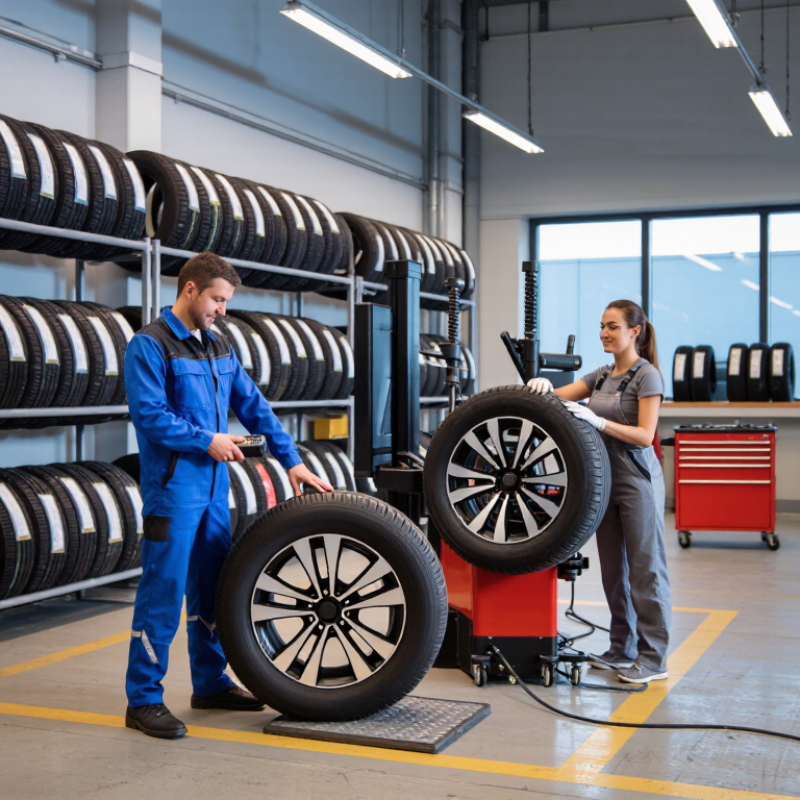
A tire center suitable for global buyers must offer more than a wide product range.
It should explain load ratings, speed symbols, tire dimensions, and vehicle compatibility clearly. Electric vehicles already influence this service model. The International Energy Agency reported that global electric car sales exceeded 17 million in 2024. Therefore, centers need staff who understand heavier vehicle loads, low rolling resistance, and noise requirements. Practical knowledge matters at the counter.
Reliable export support is equally important.
UN Trade and Development reports that over 80% of global merchandise trade moves by sea. A capable tire center should provide strong packaging, accurate invoices, production dates, and shipment tracking. It should also explain regional requirements without making careless promises. UNECE Regulation No. 117 covers areas such as wet grip, rolling noise, and rolling resistance. However, technical rules vary by market. Buyers should request current test documents and verify local acceptance independently. I have seen attractive online catalogs hide unclear warranty terms. That weakness deserves attention.
Tips: Ask for tire photos, date codes, load indexes, test certificates, and written warranty conditions. Check whether customer support can answer in your language. Request a sample shipment before placing a large order. A small trial can reveal slow replies, weak packaging, or confusing paperwork. Mistakes still happen, even with experienced suppliers, so transparent correction procedures are valuable.
Choosing among the 10 best tire centers for global buyers requires more than comparing prices.
Tire quality begins with materials, tread design, casing strength, and production consistency. Ask for recent test reports, batch records, and a clear warranty policy. A reliable supplier should explain wet braking, rolling resistance, noise levels, and expected mileage in practical terms.
Certifications need careful checking. A factory quality certificate, such as ISO 9001, shows process control, but it does not automatically prove tire performance. Product markings and approvals must match the destination market. Request certificates with issuing-body details, test dates, product sizes, and model references. During supplier reviews, I have found that unclear documents often create more concern than poor-looking packaging. Small details matter.
Product range also reveals technical capability. Compare passenger, light-truck, commercial, winter, all-season, and specialty tires when relevant. Check available sizes, load indexes, speed ratings, and replacement support. A wide catalog is useful, but consistency matters more. One supplier may offer hundreds of sizes yet struggle with repeat orders. Another may provide fewer options with better traceability. Inspect sample sidewalls, tread depth, rubber uniformity, and packaging before placing a large order. Do not rely only on photographs. They can hide uneven finishing and storage damage.
International customers should judge tire centers by support, not showroom size. A capable center checks load ratings, speed ratings, pressure units, and local road conditions. It should also explain the findings in clear English or another agreed language. Translation matters when a warning appears on a service invoice.
The Tire Industry Association has reported that about one in four vehicles may have at least one significantly underinflated tire.
Therefore, buyers should expect pressure testing, tread-depth measurements, valve inspection, and TPMS checks. Ask for dated photographs or digital records. These details help when a warranty claim crosses borders. Centers serving global customers should provide invoices with tire specifications, batch information, installation torque, and recommended recheck dates.
Safety support must continue after payment. The World Health Organization’s Global Status Report on Road Safety 2023 estimates 1.19 million annual road deaths worldwide. Tire maintenance cannot solve every road risk, but poor service can add one.
Reliable centers offer emergency guidance, multilingual contact channels, and written warranty procedures. They should clarify whether roadside help applies internationally. That answer is often vague.
I would also question centers promising universal fitment. Vehicle weight, climate, wheel design, and regulations can change the correct choice. No checklist is flawless.
Still, transparent advice is more valuable than a rushed discount. A strong center admits uncertainty, verifies measurements, and recommends a second inspection when the evidence is incomplete.
10 Best Tire Centers for Global Buyers?
Choosing a reliable tire center requires more than comparing the advertised price. A low quote may exclude mounting, customs duties, local taxes, or recycling charges. The invoice can mislead. Ask for a landed-cost estimate before payment, including currency conversion and possible bank fees. Compare the same tire size, load rating, speed rating, and production date. A professional seller should explain these details clearly, not hide them in technical language.
Shipping policies deserve equal attention. Confirm whether delivery includes tracking, insurance, and secure packaging for heavy goods. Ask what happens if cartons arrive wet, damaged, or incomplete. Photograph the shipment before opening it. Delivery times can change during port delays or seasonal demand, so avoid promises that sound too perfect. Check the return address and the buyer’s responsibility for return freight. A cheap return policy may become expensive across borders.
Warranty terms often decide whether a purchase remains practical. Read the coverage period, mileage limits, approved inspection process, and exclusions for improper inflation or road hazards. Some centers require installation by qualified technicians and proof of regular maintenance. Keep invoices, fitting records, and pressure checks. Warranty support should be available in writing, with a clear response time. Even careful research has gaps. Product availability, tax rules, and shipping conditions can change after checkout, so confirm every important detail shortly before ordering.
Typical international online-purchase benchmarks by tire category. Prices are shown in USD per tire, shipping is expressed as a percentage of the tire price, and warranty coverage is shown in months.
Higher-priced categories can increase total landed cost when shipping is charged per tire. Warranty duration is an important purchasing factor because international returns, inspections, and replacement freight may be more difficult and expensive.
Selecting a tire center requires more than comparing prices. Match the center to your vehicle, driving climate, and typical cargo. A compact car needs different load capacity from a delivery van or electric vehicle. Ask technicians to verify size, load index, speed rating, and the manufacturer’s pressure label.
A reliable center should inspect tread depth, sidewall damage, valve condition, and tire age. Request the production date code before installation. The U.S. Department of Energy reports that correctly inflated tires can improve fuel economy by up to 3.3%. Its guidance also notes that underinflation increases rolling resistance. Small pressure losses matter.
Service quality matters after purchase. Choose a facility with calibrated torque tools, alignment equipment, and written inspection records. Technicians should explain rotation intervals and pressure changes for winter temperatures. NHTSA tire-safety research links tire problems with thousands of crashes annually, making routine checks practical rather than optional. Watch the process.
For mixed climates, ask whether the center recommends all-season, summer, or winter designs. For electric vehicles, confirm the tire supports the vehicle’s weight and torque demands. A center that refuses to explain these choices may still sell a suitable tire, but that is not enough. I would also compare two inspections, because one technician can miss what another notices.